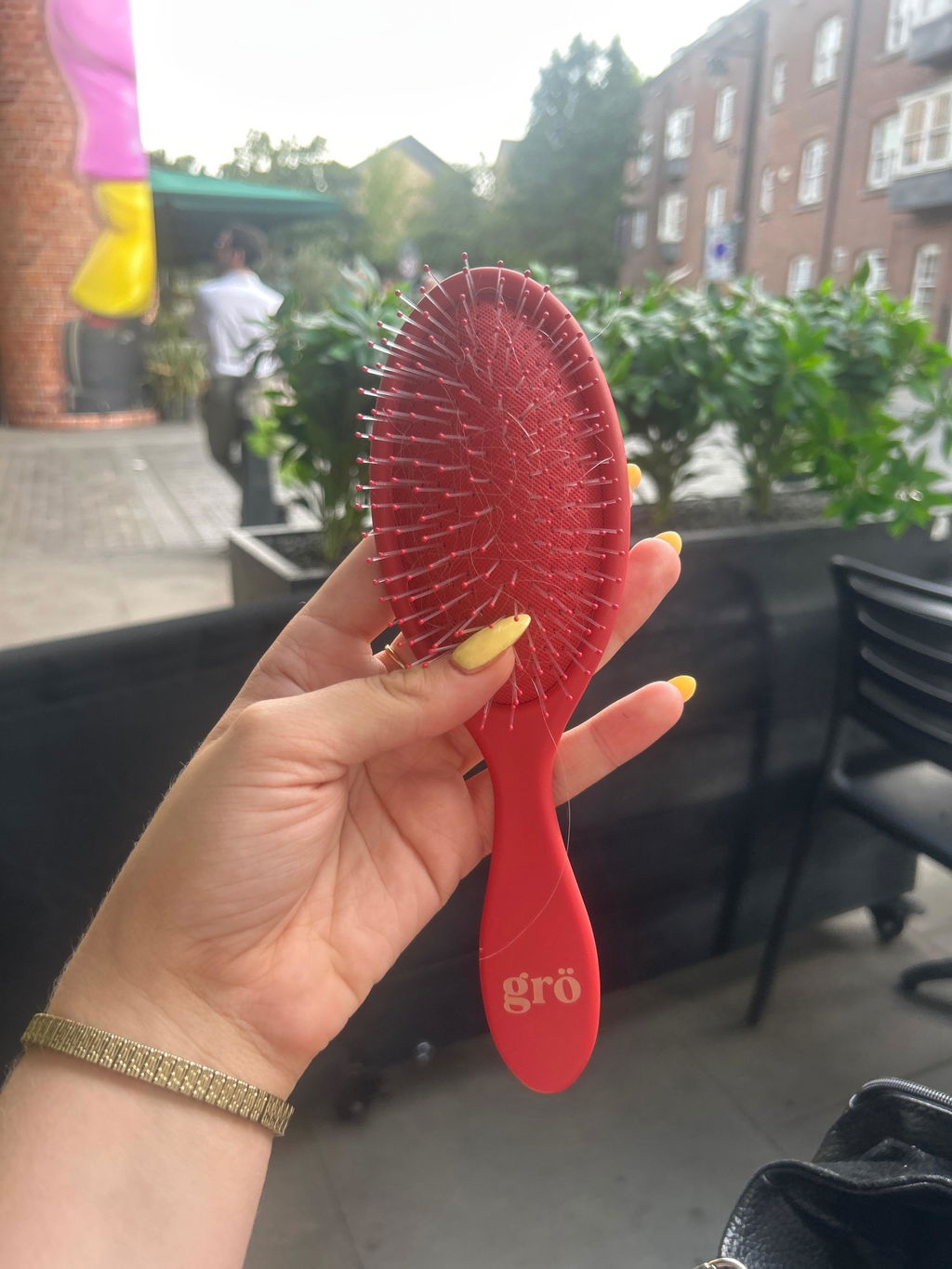
Most people have never thought critically about their hairbrush. You grab whatever’s on the shelf, use it until it falls apart, and repeat. But if you’re spending money on shampoo, conditioner, treatments, and masks, ignoring the tool that touches your hair the most is a blind spot.
Here’s what actually matters when choosing a hairbrush.
Bristle type
This is the single most important factor, and it depends entirely on your hair type.
Boar bristle
Best for fine to medium hair. Boar bristles are soft, natural, and brilliant at distributing your scalp’s natural oils from root to tip. This gives you that natural shine without adding product. They’re gentle and reduce static.
Nylon bristle
Better for thick, dense, or curly hair. Nylon bristles are stiffer, which means they can actually penetrate through thicker hair. They’re great for detangling but can be harsh on fine hair.
Mixed bristle
The best of both worlds. A mix of boar and nylon bristles gives you the detangling power of nylon with the smoothing and oil-distributing benefits of boar. This is what we recommend for most people.
The handle
An underrated factor. A brush handle that’s too short, too thick, or the wrong shape makes brushing feel awkward. You want something that sits comfortably in your hand—you’re using this every single day, so ergonomics matter.
Weight plays into this too. A brush that’s too heavy creates fatigue; too light and it feels cheap. The sweet spot is a handle with just enough heft to feel substantial.
The pad and cushion
The cushion beneath the bristles determines how the brush moves through your hair. A good cushion flexes with the shape of your head, so the bristles maintain contact and distribute pressure evenly. A stiff, rigid pad means certain bristles bear all the weight—leading to pulling and snagging.
Look for a pneumatic (air-cushioned) pad. It gives the right amount of bounce and flexibility.
Build quality and longevity
A quality hairbrush should last years, not months. The bristles shouldn’t fall out after a few weeks. The handle shouldn’t crack. The cushion shouldn’t deflate.
Cheap brushes are cheap for a reason: lower-grade materials, poor assembly, bristles that splay after minimal use. You end up replacing them more often, which costs more in the long run and creates more waste.
Explore the Private Matter collection—every brush designed with these principles at its core.